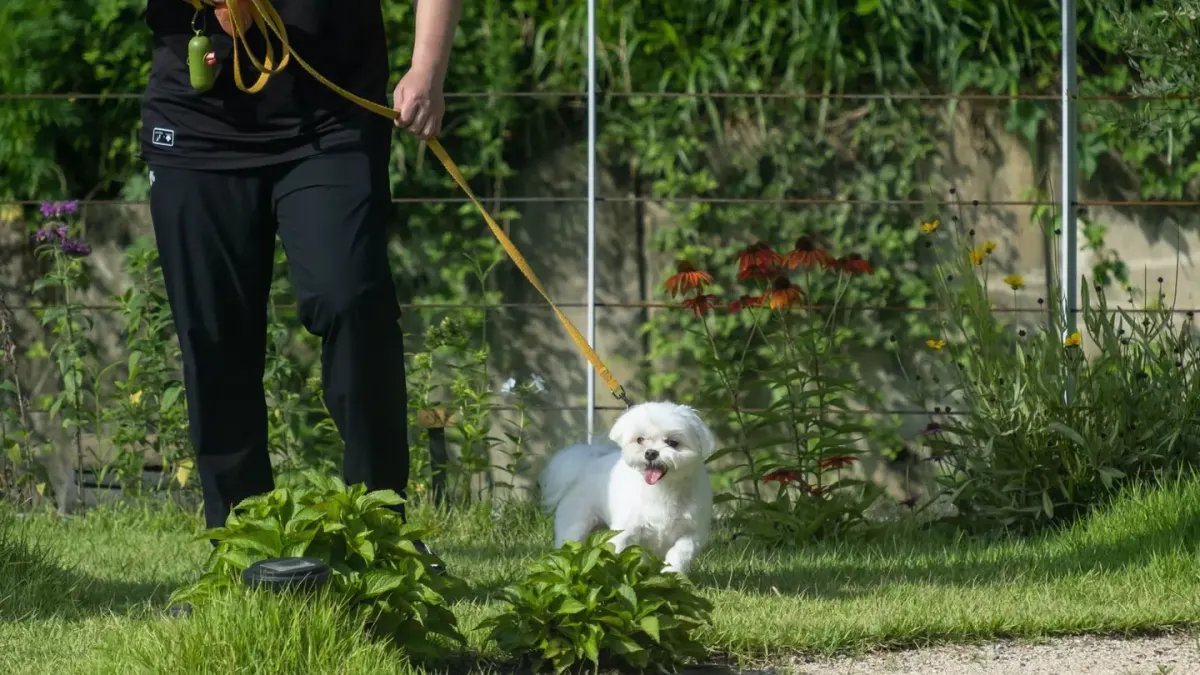
On this page
Most dogs do not fail stay because they are stubborn — they fail because we ask for longer, farther, and harder all at once. A reliable stay is three separate skills: hold position for time, hold while you move, and hold while the world happens.
Expectation first: for most pet dogs, a useful stay takes two to four weeks of short daily reps to support everyday safety, not one long weekend session. That timeline may help support calmer doorways, sidewalks, and vet visits without promising perfection.
Your stay checklist — read this, then train it:
- Start in sit or down your dog already knows
- Reward duration first: 2 seconds, then 5, then 10, then 30
- Add distance only after 15 seconds feels easy
- Add distraction only after short distance feels easy
- Never raise two challenges at once
- Release with the same word every time
- End while you are winning, in 3 to 5 minutes
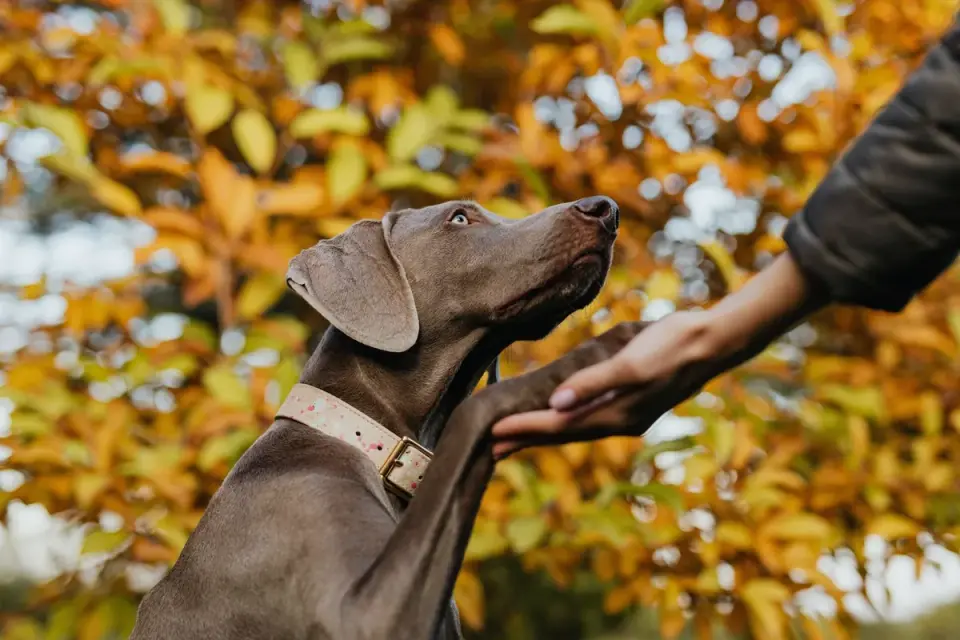
The limit almost no one plans for
Stay looks like one behavior. To your dog, stillness while you stand close for five seconds and stillness while you walk eight feet toward an open door are completely different tasks.
That is why the classic mistake happens at the front door or curb. The owner asks for a 30-second stay, backs up six feet, and waves a guest inside — duration plus distance plus distraction on the first try. Vets often see the same pattern behind jumping, door-dashing, and leash pulling: normal impulsive behavior paired with criteria raised too fast.
Think of it like strength training. You would not add heavier weight, more reps, and a wobble board in the same set.
What looks like disobedience is usually order
Reward-based methods work best when they keep arousal low and make the right choice obvious, a point emphasized in the American Veterinary Society of Animal Behavior position statements on humane training. Short, calm reps with frequent food rewards may help support learning and keep stress signals down.
The practical takeaway is order:
- Duration. Can your dog hold for time while you stand still?
- Distance. Can your dog hold while you take one step, then three, then across the room?
- Distraction. Can your dog hold while a toy drops, a person walks by, or the doorbell rings?
Most owners flip that list. They walk far away on day one, then wonder why duration never sticks.
Derek noticed this with Jayla, his 6-year-old spayed Poodle mix in Durham. She could hold a sit-stay for 20 seconds with him close, but broke every time he stepped past six feet toward the kitchen. He reset to two feet for three days, built to 12 feet in 2-foot steps, and her break rate dropped from nearly every rep to about one in eight.
Your stay checklist, expanded
Use tiny pea-sized treats and a quiet room at first. You will need a marker word like “yes” and a release word like “okay” or “free.” Say the release word once, cheerfully, and toss the next treat away from the spot so staying and leaving stay distinct.
If you are still polishing the starting position, review How to Teach a Dog to Sit: The Method That Actually Sticks before you add stay criteria.
- Choose one position. Sit-stay for greetings and curbs; down-stay for meals and longer waits.
- Pay in position. Deliver the treat between the paws or at chest height, not after your dog pops up.
- Grow duration in small jumps. Aim for 3 seconds, 5 seconds, 8 seconds, 12 seconds, 20 seconds, 30 seconds.
- Grow distance in steps, not leaps. One step back and return. Two steps. Across the room.
- Always return to reward. Walk back to your dog to pay, then release. Calling from a stay teaches breaking.
- Keep sessions short. Two or three 3-minute sessions beat one 15-minute drill.
Stillness is tiring. That is normal.
Teach duration first, then distance, then distraction
Here is a same-day sequence you can run tonight.
Step 1: Charge the cue. Ask for sit. Palm out like a stop sign, say “stay” once, pause two seconds, mark “yes,” reward in position, then “okay!” Repeat five times.
Step 2: Stretch to 10 seconds. Add two to three seconds at a time. If your dog breaks twice in a row, cut the time in half for the next three reps. The American Kennel Club stay lesson describes the same progression of brief holds with a release before adding movement.
Step 3: Add one step. Once 10 to 15 seconds is easy, say “stay,” take one step back, pause, step in, reward, release. Build to three steps, then five, then walking a small circle.
Step 4: Add one distraction. Drop your keys softly, walk past a chair, or have someone walk quietly across the room at 10 feet. Keep duration and distance easy while the new distraction is present.
Step 5: Practice where you need it. Doorway, sidewalk, clinic lobby. Start over at two seconds and three feet in each new place. Dogs do not generalize well — a kitchen stay is not a park stay yet.
For ideas on chaining stays into other tricks without losing criteria, see How to Teach a Dog to Spin (Without Losing the Behavior You Already Built) and How to Teach a Dog to Take a Bow.
Fix the three most common breaks
Breaking when you move. You added distance too soon. Halve the distance, double the pay rate for three sessions, and pivot your shoulders sideways instead of leaning toward your dog.
Breaking on release-word confusion. Everyone in the house must use the same release word. Casual “okay” in conversation will release some dogs early — pick “free” if that happens.
Breaking only outside. That is not defiance. Smells, dogs, and traffic raise arousal past your dog’s current baseline. Train at quiet times, use higher-value rewards outdoors, and accept a 5-second outdoor stay as a win while you rebuild.
If barking erupts during stays at windows or fences, train the stay away from the trigger first, then work on the vocal behavior separately with How to Teach a Dog to Speak on Cue.
Call your veterinarian or a credentialed trainer for a tailored plan if your dog shows stiffening, growling, snapping, panic, or shuts down and will not take treats. Those signs point past a training gap.
Frequently asked questions
How long should a beginner stay last?
Start with 2 to 5 seconds and build to 30 seconds indoors before you add real distance. A short stay you can reward is more useful than a long stay your dog breaks.
Should I use sit-stay or down-stay?
Use sit-stay for brief waits like curbs and greetings, and down-stay for longer waits like meals or restaurant patios. Keep one release word for both.
Why does my dog stay at home but not outside?
New places add distraction that competes with learning. Restart at 2 to 3 seconds and a few feet away outdoors, then rebuild duration, distance, and distraction in that order.
Sources
- Position Statements — American Veterinary Society of Animal Behavior
- Teach Your Dog to Stay — American Kennel Club