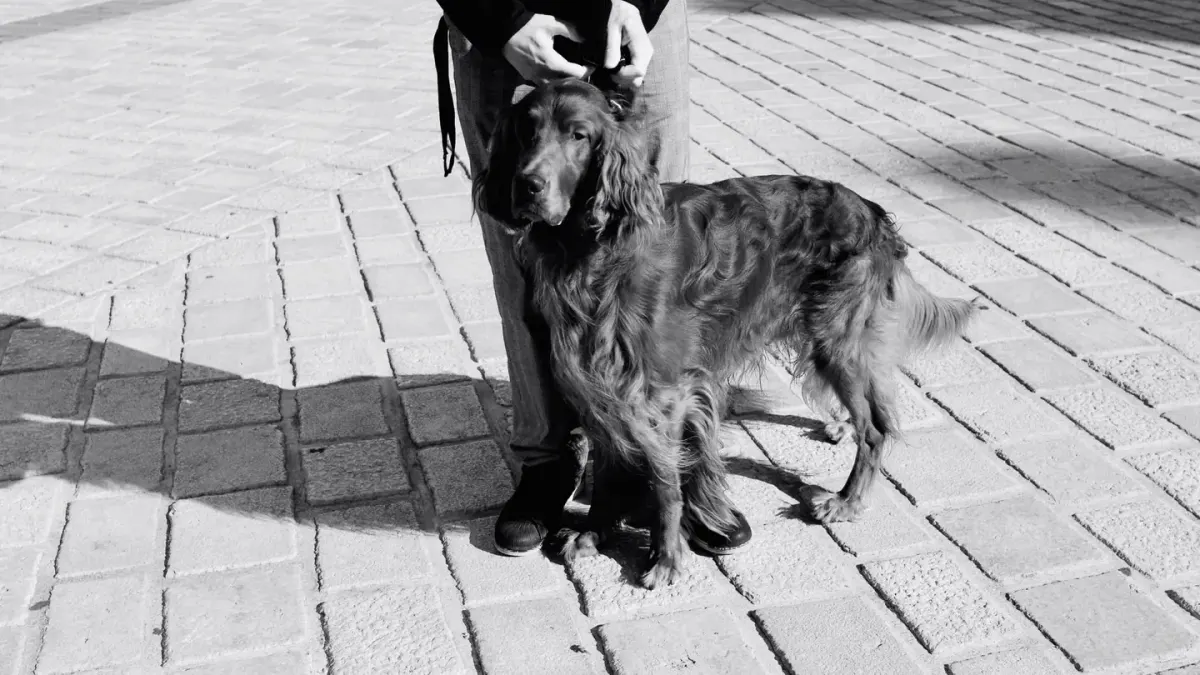
Is a “senior-proofed” yard even a real thing, or just marketing?
It’s a fair question, and I get asked some version of it in almost every hospice consult where the dog still loves the backyard. The honest answer: there’s no single certification, no checklist that makes a yard “senior-safe” in one pass. What there is, instead, is a set of specific, fixable hazards that get more dangerous as a dog loses muscle, joint cushioning, hearing, or sight — and most owners have never been told to look for them.
Before the details, the short list I actually walk owners through:
- Trade slick surfaces (sealed concrete, wet decking, loose gravel) for traction — rubber matting, outdoor-rated rugs, or textured pavers along the dog’s usual path.
- Recheck fence lines and gate latches; a dog who used to respect an invisible boundary may no longer hear the warning tone or see the yard’s edges clearly.
- Add shade and a water source close enough that an arthritic or recovering dog doesn’t have to cross the whole yard to reach either one.
- Ramp or step down anything higher than a curb — a deck stair, a raised patio, a pool ledge.
- Light the yard for dusk and early-morning trips, especially if vision is declining.
- Watch the clock, not just the thermometer, during exercise or bathroom breaks in hot weather.
Each of those earns its own explanation, because the reasoning matters as much as the task.
Why footing is the first thing I check, not the fence
In my practice, I’ve watched this play out more times than I can count: an eleven-year-old Labrador named Gus, sixty-two pounds, with moderate hip arthritis, whose owners called me worried he’d “suddenly gotten clumsy” on the back patio. Nothing had changed about Gus. What had changed was six months of slow muscle loss in his hindquarters, the kind that happens gradually enough that owners rarely clock it day to day. On sealed concrete, still-mostly-fine joints and a little less muscle is enough to turn a confident walk into a slide, especially right after he stood up from a nap. We didn’t need imaging to explain it — we needed rubber-backed runners from the door to his favorite sunny spot, and within a week his gait on the patio looked like his gait indoors again. Traction doesn’t fix arthritis. It removes one of the ways arthritis gets a dog hurt.
That’s really the throughline for outdoor safety in aging dogs: joints and muscles that are already working harder don’t have much reserve left for surprises. The AAHA Senior Care Guidelines for Dogs and Cats note that orthopedic support and non-slip flooring — via rugs, yoga mats, or traction aids — meaningfully reduce fall risk for arthritic pets, and that ramps or steps are preferable to letting a dog jump on and off elevated surfaces. Outdoors, that translates to a textured path replacing bare concrete or a wooden deck, and a ramp replacing any stair taller than a curb. If your dog is also managing arthritis day to day, our guide on comfort mistakes that make arthritis harder on a dog covers the indoor half of this same problem.
The myth worth retiring: “he knows this yard, he’ll be fine”
This is the assumption I push back on most. Owners tell me their dog has lived in this yard for eight, ten, twelve years — he knows every inch of it. And that was true, right up until his hearing or vision started to fade, at which point “knowing the yard” stopped being enough. A dog who used to hear the gate latch, the mail truck, or your voice from the far corner of the yard may now be relying almost entirely on scent and memory. Memory is good, but it doesn’t account for a gate that got left open a few inches, a pool cover that shifted, or a neighbor’s dog suddenly at the fence line.
If hearing loss is part of your dog’s picture, the safety principles overlap closely with what I cover in helping a deaf senior dog feel safe at home — consistent routes, visual cues, and never assuming a startle response won’t happen. Outdoors specifically, that means re-walking your fence line at your dog’s eye level, checking every latch by hand rather than by memory, and adding a visual boundary — a low decorative fence section, a change in paving texture — at any edge a fading-vision dog might not clock in time, like a pool deck or a drop to a lower patio level.
What actually changes for a recovering dog versus an aging one
Recovery and aging overlap but aren’t identical problems. A dog on strict rest after cruciate surgery needs the yard to almost disappear for a few weeks — a short leashed trip to a designated bathroom spot and back in, nothing more. An aging dog with chronic arthritis or early cognitive change needs the opposite: continued, safe access to the yard, because activity and mental engagement matter for quality of life, just delivered in a lower-risk form.
For a recovering dog, I ask owners to pick the shortest, flattest, most direct route from the door to a bathroom spot and commit to using only that route, on leash, every single time, until their surgeon clears more freedom. For an aging dog without a fresh surgery, the goal is closer to what it’s always been — regular time outside, sniffing, moving at their own pace — just with the hazards above addressed so that time outside doesn’t create a new problem.
Heat deserves its own mention here because it punishes both groups. Recovering dogs often move less efficiently and can’t self-regulate temperature as well while healing; older dogs, especially those carrying extra weight or with flatter faces, are named directly as higher-risk groups by the American Veterinary Medical Association, which recommends exercising dogs only during cooler parts of the day and making sure shade and water are always available outdoors. I’d add one practical note from clinic experience: for a senior or recovering dog, “available” should mean no more than a few steps away, not across the yard — because a dog already managing joint pain or a healing incision won’t reliably make the trip to reach it, especially in the heat that makes it most necessary.
Where I land
I’ll say plainly what my strongest counterargument is, because it’s a fair one: some owners feel that all this restructuring is overkill for a dog who “still gets around fine.” I understand the instinct — nobody wants to treat a functional, happy dog like a fragile one. But the dogs I see in hospice and palliative care are disproportionately the ones whose families made that same reasonable-sounding call and didn’t revisit it until after a fall, a heat scare, or an escape through a gate the dog could no longer hear open. The changes I’m describing here aren’t about babying an older dog. They’re about matching the yard to the dog they are now, not the dog they were five years ago, so the yard keeps being a source of comfort instead of becoming the place where something goes wrong.
One consult still sits with me: a fourteen-year-old Beagle mix, Daisy, thin-coated and about thirty pounds, whose owners called after she’d started pacing near the back door instead of asking to go out the way she used to. It turned out the deck steps she’d descended without a thought for a decade had quietly become a real obstacle once her rear-end strength dropped — she wasn’t refusing the yard, she was afraid of the steps. A folding ramp and a strip of outdoor traction matting solved it within days; she was back to her evening rounds of the fence line, at her own slower pace, by the following week. That’s the outcome I want for every dog in this position: not a smaller world, just a safer version of the same one, so their comfort — and their family’s peace of mind — can hold for as long as good days keep coming. If your dog’s mobility also affects how they eat or drink outside, are raised bowls better for senior or arthritic dogs is worth a look, and if slick footing is a problem indoors too, best flooring choices for a home with senior dogs picks up right where this leaves off.
Frequently asked questions
How do I know if my senior dog's backyard is actually unsafe, or if I'm overreacting?
Watch for hesitation at steps or slick spots, slower or wider-stanced walking, or reluctance to go out at all — these are more reliable signs than how the yard "looks." A dog who used to bound off the deck and now pauses at the top of it is telling you something changed.
Do I need to fully renovate the yard, or can I start smaller?
Start with the highest-risk, lowest-cost fixes: traction on the main path, a ramp over any step, and shade plus water within easy reach. Fencing and lighting upgrades can follow as budget allows.
My dog is recovering from surgery, not just aging — does the same advice apply?
The hazards overlap, but a recovering dog usually needs a shorter, stricter, leash-only route to a single bathroom spot rather than general yard access, until your surgeon or vet clears more freedom.
Sources
- 2023 AAHA Senior Care Guidelines for Dogs and Cats — AAHA
- Warm weather pet safety — American Veterinary Medical Association