
On this page
Most families don’t plan a single-floor setup. They back into it, one bad night at a time — a slip on the landing, a whine at the bottom step, a dog who used to bound upstairs and now just stands there, looking up, deciding whether it’s worth it.
The limitation nobody explains at the vet visit
When a dog stops using stairs, owners usually assume it’s a training problem, or stubbornness, or a bad day. It’s rarely any of those. Stairs ask a lot of a body: eccentric control on the way down, explosive extension on the way up, precise foot placement on a narrow, often slick surface. A dog with osteoarthritis may still walk a flat yard just fine while stairs become the one task that reliably hurts. Canine Arthritis Resources and Education notes that home modifications — including addressing stairs directly — are a core part of managing dogs with osteoarthritis, not an afterthought.
The same logic applies, for different reasons, to dogs recovering from spinal or neurologic disease. According to the American College of Veterinary Surgeons, running up and down stairs and jumping on and off furniture are associated with a higher risk of intervertebral disc herniation, and ramps plus limited stair access are standard long-term management for dogs recovering from or prone to disc disease. Cornell’s Riney Canine Health Center describes a related picture in degenerative myelopathy: as hind-limb weakness progresses, dogs should avoid stairs whenever possible, with ramps, non-slip flooring, and orthopedic bedding named specifically as the safer substitute (Cornell University College of Veterinary Medicine).
I open most of these conversations the same way, sitting with a family whose dog has just stopped climbing to the bedroom. The dog isn’t in crisis. The house is what’s behind. Before we talk about any product, we talk about the floor plan, because comfort starts with geography, not gear.
A dog’s first week on one floor
Picture a 9-year-old Labrador retriever, 72 pounds, three weeks out from a diagnosis of moderate hip and elbow osteoarthritis. Her family had always let her sleep upstairs. In week one, they moved her orthopedic bed, water bowl, and a low-sided food dish into a corner of the ground-floor den, blocked the staircase with a gate, and added a bathmat-style runner over the tile hallway. By day 10, she was choosing that corner on her own, even when the gate was briefly left open — a small but telling sign that the new setup, not just the barrier, had become the more comfortable option. That’s the marker I look for: not compliance, but preference.
The myth worth retiring: that ramps and gates fix everything on their own
A ramp solves one problem — vertical transition — and it solves it well. It does nothing for a slick tile hallway, a dog food station that’s still upstairs, or a potty door that requires three steps down to the yard. Single-floor living means auditing the whole daily route your dog actually walks: sleeping spot, water, meals, the door she uses to go out, and wherever she settles during the day. Each of those needs to exist on the accessible floor, with the transitions between them addressed with a ramp or non-slip surface, not just the staircase itself.
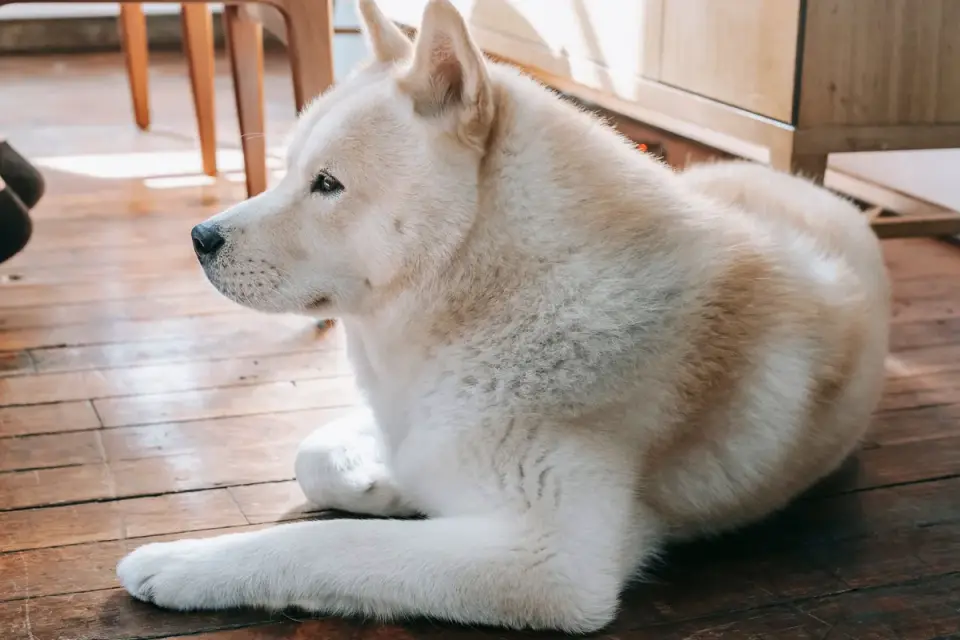
Traction matters more than most owners expect. Hardwood, tile, and laminate all become genuinely hazardous for a dog with weak or painful hind limbs — CARE specifically flags nail length and floor traction as levers owners can adjust immediately, and Cornell’s material on both degenerative myelopathy and intervertebral disc disease lists non-slip flooring alongside ramps as a baseline home modification, not an optional upgrade. Runners, washable rugs, or interlocking rubber-backed mats along the main walking paths cost little and change a dog’s confidence almost overnight.
Building the actual setup, room by room
Start with sleep. Put the primary bed on the accessible floor, in a spot the dog already gravitates toward during the day — not tucked into an unused guest room just because there’s space. If your dog splits time between rooms, a second, cheaper resting mat in the other frequently used spot beats forcing every nap onto one bed.
Next, food and water. Move both bowls down permanently; don’t leave one set upstairs “just in case.” A slightly raised bowl can help dogs with neck or shoulder discomfort, though this should be sized to the individual dog rather than assumed.
Then the exit route. If the door your dog uses to potty involves even two or three steps down to the yard, a ramp there matters more than one at the front porch nobody uses. For dogs recovering from disc disease or advancing neurologic weakness, this is often the single highest-risk transition point in the whole house, since it happens multiple times a day, often in a hurry.
Finally, close off what you’re not converting. A stair gate isn’t a failure of training — it’s the same environmental control ACVS describes for at-risk spines, limiting unsupervised access to the one structure in the house most likely to cause a fall or a flare.
If your dog is also dealing with joint pain from a specific injury, our bed ramp setup for a TPLO recovery dog walks through transition points in more surgical-recovery detail, and a car ramp for a large dog that can’t jump into the SUV extends the same thinking to the vehicle, which is often the transition families forget until the first vet visit after diagnosis.
Where the tradeoffs get harder than the checklist suggests
Here’s the case that complicates a tidy checklist. A 6-year-old French Bulldog, 28 pounds, had an acute disc flare and was sent home on strict rest with a ramp and a downstairs bed — the standard advice. Three weeks in, the family reported she was pacing at the bottom of the stairs every evening at the exact hour her people used to carry her up for a shared TV routine. The physical setup was correct. What it hadn’t accounted for was that “can’t do stairs” also meant losing a nightly ritual that mattered to her, not just a physical task. The fix wasn’t more equipment — it was moving that routine downstairs too, chair and blanket included, so the behavior had somewhere to land.
That’s the piece I’d ask families to sit with: a single-floor setup is a comfort plan and a household-habits plan at the same time. Get the ramps and traction right and skip that part, and you can still end up with a dog who’s physically safe but restless, testing the gate, unsettled in a way that looks like pain but is really just displaced routine.
Where I land
I’d rather a family over-modify the ground floor in the first week than wait to see if the dog “gets used to” stairs — most orthopedic and neurologic conditions that end stair use don’t resolve on their own, and the fall risk in the meantime is real. The strongest counterargument is cost and clutter: not every household can gate a staircase, buy a ramp, and duplicate bedding without real friction, especially in smaller homes. I understand that constraint, and I still land on doing the floor plan first, because it’s the change with almost no downside and the most evidence behind it. Buy the ramp when you can. Fix the traction and move the bed today.
For dogs whose limitation is age-related rather than diagnosis-specific, our home setup for a giant breed entering its senior years and helping a large dog that can’t stand up on its own go further into the standing and rising side of mobility, which often shows up around the same time stairs stop working. This guide is meant to help you act today; it isn’t a substitute for your veterinarian’s exam, especially if the stair avoidance is new or sudden.
Frequently asked questions
Is a ramp enough, or do I need to change flooring too?
A ramp only solves vertical transitions like a staircase or a step down to the yard. Slick hardwood, tile, or laminate along the rest of your dog's daily route can still cause dangerous slips, so non-slip runners or mats matter just as much as the ramp itself.
How do I know if my dog's stair avoidance is pain versus just aging?
Sudden or one-sided stair avoidance, especially with limping, yelping, or reluctance to jump, warrants a veterinary exam rather than an assumption of normal aging — the underlying cause changes how you should modify the home.
Where should the water and food bowls go in a single-floor setup?
Move both permanently to the accessible floor, in a spot your dog already prefers to rest in during the day, rather than leaving a duplicate set upstairs "just in case."
Sources
- Home Environment Modifications For Dogs With OA — Canine Arthritis Resources and Education
- Intervertebral Disc Disease — American College of Veterinary Surgeons
- Degenerative myelopathy — Cornell University College of Veterinary Medicine