
On this page
Leaving a dog in an indoor pen while you cook dinner or answer the door can feel uneasy, especially when whining or pacing starts and you worry comfort has slipped into confinement. As a veterinarian focused on comfort and quality of life, I watch for the same early signs in the body before I change anything in the room, because calm rests on physiology first.
Why extra space alone rarely settles a dog
A pen gives boundaries, but the nervous system decides whether those boundaries feel safe. Dogs settle through predictable cues for rest, including a soft surface that supports joints, a slightly dimmer corner, steady airflow, and the scent of a familiar person or bed. When light, noise, and foot traffic keep shifting, arousal stays high and the stress response stays primed, so panting, circling, or barking continue even in a large pen.
That is why my recommendation is steady across households. Build the indoor pen as a resting base your dog can choose during the day, not as a place that only appears when you need containment. The Merck Veterinary Manual describes how normal canine social behavior depends on rest, affiliative contact, and predictable daily patterns, which supports keeping the pen open, bedded, and part of family life rather than separate from it.
I would change this view if controlled evidence showed dogs rested longer and showed fewer stress-related behaviors when confined only on demand versus given free access to the same enriched pen. That evidence does not exist in the current behavior literature, and what we do have points toward predictability and choice supporting calmer rest.
The tired-dog myth that backfires indoors
Many families are told a long walk or fetch session will make pen time easy. Exercise may help support normal energy balance, but fatigue is not the same as felt safety.
The American Veterinary Society of Animal Behavior emphasizes humane, reward-based approaches that address underlying emotional state rather than suppressing behavior through force or prolonged confinement. In practice, a dog placed in a pen while still panting, thirsty, or mentally buzzing often struggles to settle, and then the family worries the pen itself has failed.
Vets often see this pattern in senior dogs first. Erik, living in Pomona with Samurai, a 10-year-old neutered male Labrador Retriever mix, noticed Samurai would lie down for about 20 minutes in a bare pen near the kitchen, then rise, lip-lick, and pace to the gate. The issue was not disobedience. The hard floor pressed on stiff elbows, the kitchen noise never paused, and water sat outside the pen.
Comfort settled him more than correction ever could.
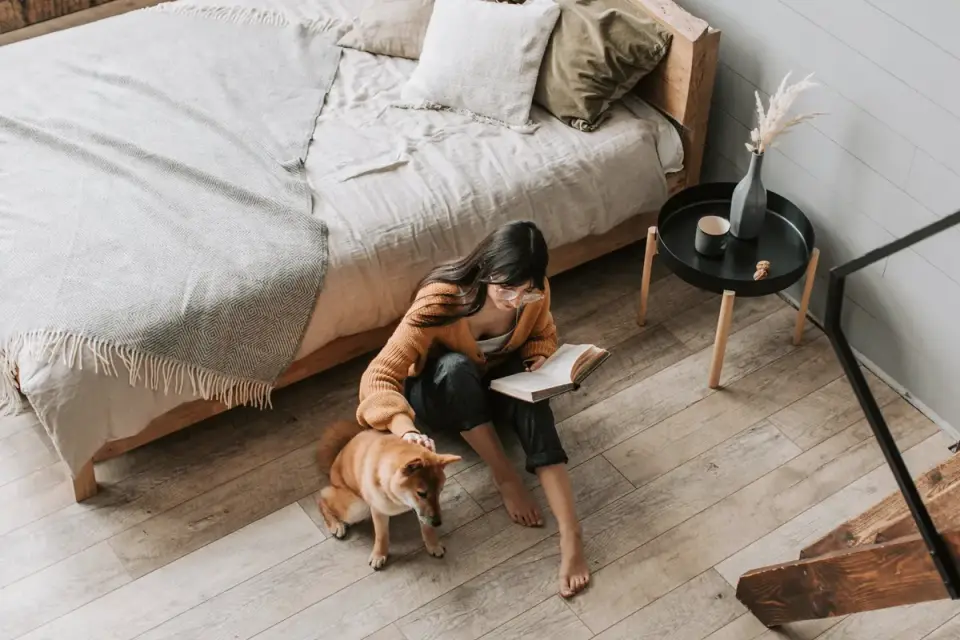
A calm-pen sequence you can use today
Think in layers, from location to bedding to routine. Small choices add up to a place that may help support rest.
1. Place the pen where life feels steady. Choose a corner of a lived-in room, with one solid wall behind the bed and a clear view of you. Avoid hallways, direct heat vents, and the center of play areas. For anxious dogs, the same low-traffic logic in Setting Up a Calm Safe Space for an Anxious Dog works well inside a pen.
2. Soften sound, light, and floor. Lay a washable orthopedic or quilted bed over a non-slip mat, add a low-sided blanket for burrowing, and drape a breathable cover over one half of the pen to reduce visual motion. Leave the front open when you are home so coming and going stays normal.
3. Keep needs inside the boundary. Water, a chew, and a familiar-smelling shirt or blanket belong in the pen, not just outside it. For older or sensory-impaired dogs, the lighting and texture tips in Helping a Deaf Senior Dog Feel Safe at Home translate directly to pen setup.
4. Pair the pen with short, calm entries. Invite the dog in with a stuffed Kong or lick mat, sit nearby for five to ten minutes while you read, then let the dog walk out. Repeat two to three times daily before you ever close the gate for a chore. Cornell University College of Veterinary Medicine notes that gradual departures, consistent routines, and avoiding punishment for distress-related behavior may help support calmer alone time, which is the right model for pen training.
5. Watch the body, not the clock. Settling looks like a heavy sigh, hip roll, soft eyes, and slow blinking. Rising quickly, yawning repeatedly, drooling, or scanning the room suggests noise, temperature, or duration needs adjusting. If strict rest has been prescribed after surgery, use the confinement pacing in A Confinement-and-Comfort Plan for Strict Rest Orders rather than stretching pen time.
Melanie, living in Rockford with Paulina, an 8-year-old spayed female shepherd mix, found this sequence useful after adoption. Paulina avoided a pen placed by the front door but chose the same pen within three days once it moved beside the sofa, gained a second bed layer, and stayed open during evening television. The observable change was simple. She walked in on her own and slept.
Where I land
An indoor dog pen works best when it protects comfort first and containment second. Keep it soft, predictable, and connected to you, let your dog practice choosing it in short sessions, and shorten or move the setup when the body tells you rest is fraying. That quality-of-life framing is slower than asking for quiet on cue, but it builds the kind of calm that lasts through busy households, work calls, and recovery weeks.
Frequently asked questions
How big should an indoor dog pen be?
Choose a pen large enough for a full bed, water, and room to stand, turn, and stretch without stepping on bedding. More floor space does not replace soft footing, low noise, and a predictable routine.
Should I close the pen door during the day?
Keep the door open while you teach the pen as a resting place, then close it for short periods only when needed. If your dog pants, paces, or vocalizes, shorten the session and adjust comfort before adding time.
What belongs inside a calm indoor pen?
A supportive bed on a non-slip surface, fresh water, one safe chew or enrichment item, and something that smells familiar. Avoid piling in toys that roll underfoot or block resting space.
Sources
- Normal Social Behavior in Dogs — Merck Veterinary Manual
- Position Statements — American Veterinary Society of Animal Behavior