On this page
Most owners treat cold tolerance like a single number — a temperature where it becomes “too cold to walk the dog.” I wish it worked that way. In my practice, the dogs I worry about in January aren’t always the ones out in the coldest weather; they’re the ones whose owners didn’t adjust the walk to the dog in front of them.
The myth: if it’s above freezing, any dog is fine
The assumption that 32°F is some universal cutoff doesn’t hold up. A well-built Siberian Husky with a dense double coat can comfortably work in weather that would put a Chihuahua at real risk within minutes. According to the American Veterinary Medical Association, no pet should be left outside for long periods in below-freezing weather, and walks should be shortened as temperatures drop — but “shortened” looks different for a Greyhound than for a Bernese Mountain Dog. Small, short-coated, senior, and very young dogs lose body heat faster because of their higher surface-area-to-mass ratio, which is why they start feeling the chill well before larger, thicker-coated breeds do.
The reality: size and coat decide the ceiling, exposure time decides the risk
Here’s where I land, and I’ll say it plainly: for most cold-sensitive dogs, exercise plans should be built around exposure time and layering, not around avoiding the outdoors altogether. I don’t think the answer to winter is a treadmill in the garage for four months. A dog that gets no structured movement in cold weather often comes back in spring stiffer, softer through the topline, and less tolerant of the exercise they used to handle easily — the deconditioning cost is real. The counterargument I hear most is that it’s simply safer to keep every dog indoors once temperatures drop, full stop. I understand the instinct, but for a fit, appropriately coated adult dog, that’s over-correcting; the actual hazard is prolonged exposure in an underprepared dog, not moderate outdoor activity itself.
One patient who stuck with me: a 9-year-old Whippet, about 24 pounds, whose owner called in December worried he’d “stopped wanting walks.” What had actually happened was three weeks of 25–30°F mornings with no coat and 20-minute loops — he’d started shivering, then pulling toward home at the ten-minute mark, then refusing the leash altogether by the third week. Once we cut walks to 10 minutes, added a fitted coat, and moved the rest of his activity to a heated sunroom with scent games and short fetch sessions, he was back to his normal enthusiasm within about a week. Nothing was medically wrong with him. He was cold, and his body was telling his owner exactly that.
Reading the early signs before they become an emergency
Watch for whining, shivering, slowing down mid-walk, anxious behavior, or a dog actively searching for somewhere warm to burrow — the AVMA lists these as the early markers of hypothermia, and they typically show up well before anything looks like an emergency. Frostbite is trickier because it’s often not obvious until days later; it tends to hit the ears, tail, paws, and nose, showing up as discolored, white, red, or blackened skin, sometimes with blistering. If you suspect either, bring your dog inside, warm the area gradually with warm (never hot) water, don’t rub or massage frostbitten skin, and call your veterinarian.
A same-day sequence for safer winter activity
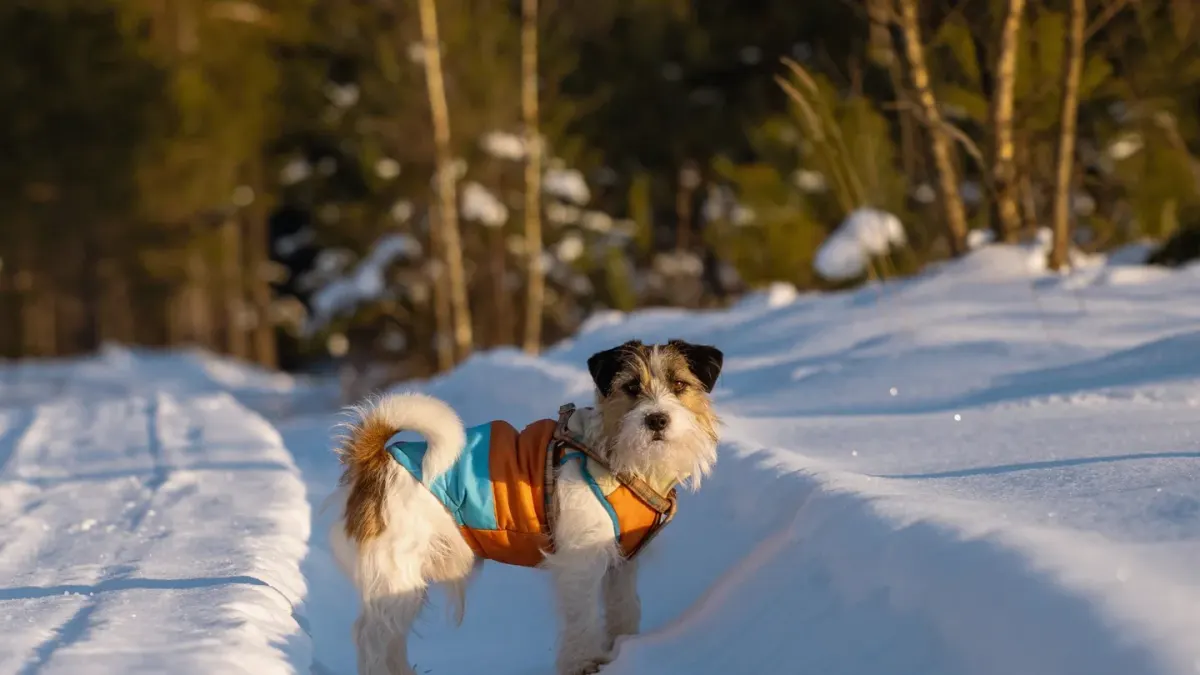
Start with the coat and build check. Short-haired, small, senior, or very young dogs generally need a fitted coat below 40–45°F; even double-coated breeds benefit from shorter sessions once temperatures fall toward 20°F, where frostbite risk climbs for every dog regardless of coat.
Next, protect the paws. Trim the hair between the toes so ice and salt don’t compact against the skin, and rinse or wipe paws with warm water after every walk. Chemical ice melts containing rock salt, calcium chloride, or magnesium chloride can burn pads and cause real irritation if left on the skin, according to the ASPCA — booties or paw wax add a useful barrier, especially for dogs with thinner pads.
Then match the activity to the dog, not the calendar. A brisk 15–20 minute walk, a short scent-work session scattering treats in the yard, tug or fetch in a heated garage or mudroom, or a slow structured trot on cleared pavement can all substitute for a longer summer walk without prolonged cold exposure. For water-loving breeds who normally swim, that outlet disappears in winter — if your dog is one who typically works off energy in a lake or pool, see our guide on whether all dogs are natural swimmers for how body shape affects their tolerance for cold water specifically, since the same principles about coat and size apply there too.
Finally, build in indoor conditioning days. Stairs, tug, flirt-pole work, and food-puzzle sessions keep a dog’s muscles and joints engaged on the days weather makes outdoor exercise impractical. If your dog is already managing a joint or mobility issue, winter’s shorter walks are exactly the season where I want owners weighing what a supplement can realistically do for diet, mobility, and recovery — omega-3s and joint-support ingredients won’t replace movement, but they can be one part of a broader plan that keeps a dog comfortable enough to stay active through the cold months.
When to call your veterinarian instead
Skip the walk and call your vet if your dog is shivering uncontrollably, seems disoriented or unusually weak, has pale or discolored skin on the ears or paws, or simply refuses to move outdoors despite being properly layered. Puppies, senior dogs, and dogs with known heart or endocrine conditions have less reserve to regulate body temperature, so I’d rather see that call made early than late.
I think back to an 11-year-old Labrador I worked with a few winters ago — 78 pounds, arthritic in both hips, whose owner wanted to keep up their usual 45-minute loop through a local park because “he’s always loved the snow.” He did love it, right up until the day he sat down mid-walk on an icy path and wouldn’t get up for several minutes. We didn’t stop his winter walks; we shortened them to 15 minutes twice a day, added traction booties for the icy stretches, and moved his midday session indoors to gentle stair work. He kept moving through the entire winter, which mattered more for his joints than any single long walk would have. The goal was never zero cold exposure — it was exposure his body could actually handle.
For general etiquette when your dog does get out to a park in winter, our piece on dog park etiquette covers reading other dogs and owners before the leash comes off, which matters just as much in the cold as any other season. And if warmer patio season is what you’re really counting down to, finding a dog-friendly patio is a good place to start planning once temperatures climb back up.
Frequently asked questions
How cold is too cold to walk a small or short-coated dog?
Many small, short-haired, senior, or very young dogs start feeling cold below about 45–50°F, and increased caution is warranted below 32°F. Below 20°F, conditions can become hazardous for small and medium dogs and frostbite risk rises for all dogs, according to the AVMA.
Is it safe to skip winter walks entirely and rely on indoor play?
For most healthy adult dogs, brief outdoor exposure with proper layering is preferable to no outdoor activity at all, since prolonged inactivity can lead to deconditioning. Indoor games can supplement, but shouldn't fully replace, shorter outdoor sessions unless your veterinarian advises otherwise for a specific health condition.
Sources
- Cold weather animal safety — American Veterinary Medical Association
- Keeping Pets Safe during Winter: The Dangers of Ice Melts — ASPCA