
On this page
A family usually calls me about confinement for the first time when their dog is old — a senior who needs a rest order after surgery, or a hospice patient who paces at night and needs a boundary that feels like comfort rather than punishment. But the questions are almost identical to the ones new puppy owners ask me, just decades apart: will my dog feel trapped, will this make them anxious, am I doing this wrong. I’ve come to believe the answer starts in the same place at both ends of a dog’s life — not with the hardware, but with what the space communicates to the animal inside it.
The limitation nobody mentions when they sell you the pen
Most playpen advice treats the enclosure as a containment problem: keep the puppy from destroying the house, keep the puppy from the stairs, keep the puppy from the cat’s litter box. That’s real, and it matters. But a pen bought and assembled with only containment in mind tends to become the place a puppy is put rather than a place a puppy chooses to settle. The physical barrier does the job either way for an afternoon. Over weeks, though, a puppy that only experiences the pen as isolation starts to associate confinement with being left out — and that association gets carried into crate training, car rides, and vet visits later on. The setup, not just the enclosure, is what determines which of those two puppies you end up with.
The myth worth retiring: bigger and closer to the action is always better
Owners often assume the safest space is the roomiest one, parked wherever the family already spends its time. Size and visibility do matter — puppies do better able to see their people, per guidance from Guide Dogs for the Blind, and a pen crammed with furniture-adjacent “launch pads” is genuinely more dangerous, not less, because puppies use chairs and low shelving to climb out. But an oversized pen with no defined resting corner just gives a puppy more room to practice restlessness. What actually calms a puppy down is predictability: the same bed in the same corner, water in the same spot, a chew-safe toy that’s always there when they arrive. The American Veterinary Medical Association: AVMA frames early experience as a formative window for how a dog will read the world — and a chaotic pen, no matter its square footage, is one more inconsistent experience layered on top of a nervous system that’s still deciding whether people and spaces are safe.
Building the setup, not just buying the pen
Start with placement before you touch the hardware. A pen in an easy-to-clean room — a kitchen, laundry room, or a corner of a living room — beats a spare bedroom down the hall, because a puppy left out of earshot of the family learns that confinement means abandonment. If you’re weighing a playpen against a baby gate for the same square footage, our companion guide on baby gates versus playpens walks through which setup actually fits a given floor plan.
Next, secure the structure itself. Locking joints and a pen anchored against a wall or a crate keep a determined puppy from knocking the whole thing sideways — a real and underappreciated hazard, since an exercise pen that tips can pin or frighten a small dog. Vertical bars discourage climbing better than horizontal ones, and any pocket, clip, or fabric panel small enough to chew loose should come out of the pen entirely.
Then furnish it for rest, not just containment: a washable bed, a water source that can’t tip, and one or two chew-safe toys — not five, which just becomes clutter a puppy has to navigate to find the bed. Introduce the pen in short five-to-fifteen-minute stretches while you’re nearby, rewarding calm settling rather than whining, and lengthen the stretches gradually. A puppy should never be confined for hours on end without a supervised break to eliminate, stretch, and reconnect with the family — that’s true of an eight-week-old puppy and, frankly, of the senior dogs I manage on strict rest.
A scene from my practice, decades later
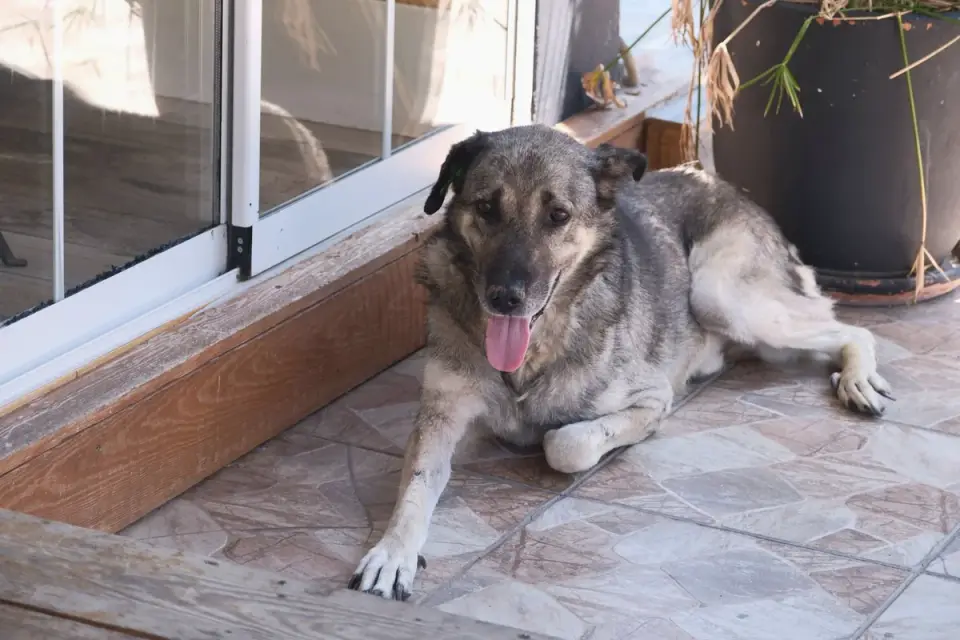
I think about a Cavalier mix named Percy I saw in hospice consult years ago — fourteen, arthritic, disoriented at night in ways his family didn’t understand yet. What steadied him wasn’t a bigger space; it was the same exercise pen, same corner of the kitchen, same orthopedic bed, every single night, so that when he woke up confused he could find his bearings by feel before he even opened his eyes. His owners had used almost the identical setup for him as a puppy sixteen weeks a lifetime removed from that consult, and they’d never bothered to change it because it had never stopped working. I don’t tell that story to suggest a playpen prevents every hard outcome years down the line — it doesn’t, and I’d be overstating the evidence if I implied it did. I tell it because consistency of place is one of the few things in a dog’s life an owner has full control over, at eight weeks and at fourteen years, and it is worth taking seriously from the start rather than treating as a phase to get through.
What to expect, and what to weigh
Confinement training is not instant. Expect protest barking or whining in the first several sessions — that’s a puppy testing the boundary, not proof the setup is wrong, though a puppy that panics, drools heavily, or injures itself trying to escape needs a conversation with your veterinarian about separation anxiety rather than a bigger pen. Weigh cost against durability: a flimsy pen a determined sixty-pound adolescent will eventually flatten is a false economy compared to one built to outlast the puppy stage. And weigh your own household’s foot traffic — a pen in a high-traffic hallway invites constant startling, which undercuts the very calm you’re trying to build.
If a puppy’s confinement anxiety doesn’t ease with consistent, short, rewarded sessions over a couple of weeks, that’s worth raising with your vet before the behavior calcifies into something harder to unwind — the same way I’d tell a hospice family to call me the moment a dog on strict rest starts refusing the pen altogether rather than white-knuckling through it.
Where I land
I favor a modest, well-anchored pen in a family room over a large one tucked away for the sake of tidiness, even though the counterargument — that more space means less frustration — has real merit for high-energy breeds. My reasoning is that a puppy’s early confinement experiences are less about square footage and more about whether the space consistently signals comfort and closeness to the family. That’s the same principle I lean on decades later with dogs at the other end of life, when a warming setup for a senior dog or a raised bowl for an arthritic dog has to earn a dog’s trust the same way a playpen does at eight weeks. Quality of life, at any age, is built out of small, repeatable things a dog can count on — not the biggest enclosure money can buy. Going forward, I’d rather see a family invest in five extra minutes of calm supervised pen time each night than in a second, larger pen they never quite finish assembling.
Frequently asked questions
How long can a puppy safely stay in a playpen?
Start with five-to-fifteen-minute sessions while you're nearby, and build up gradually. Puppies shouldn't be left confined for hours without a supervised break to eliminate, drink, and reconnect with the family.
Where should I put the playpen?
A room where the family already spends time — a kitchen or living room corner — tends to work better than an isolated spare room, since a puppy left out of sight can start associating confinement with being left alone.
Is a bigger playpen always better?
Not necessarily. Consistency of placement, bedding, and furnishings matters more for calming a puppy than raw square footage; an oversized pen with no defined resting spot can just give a puppy more room to pace.
Sources
- Socialization of dogs and cats — American Veterinary Medical Association
- Setting Up a Puppy YES Space — Guide Dogs for the Blind